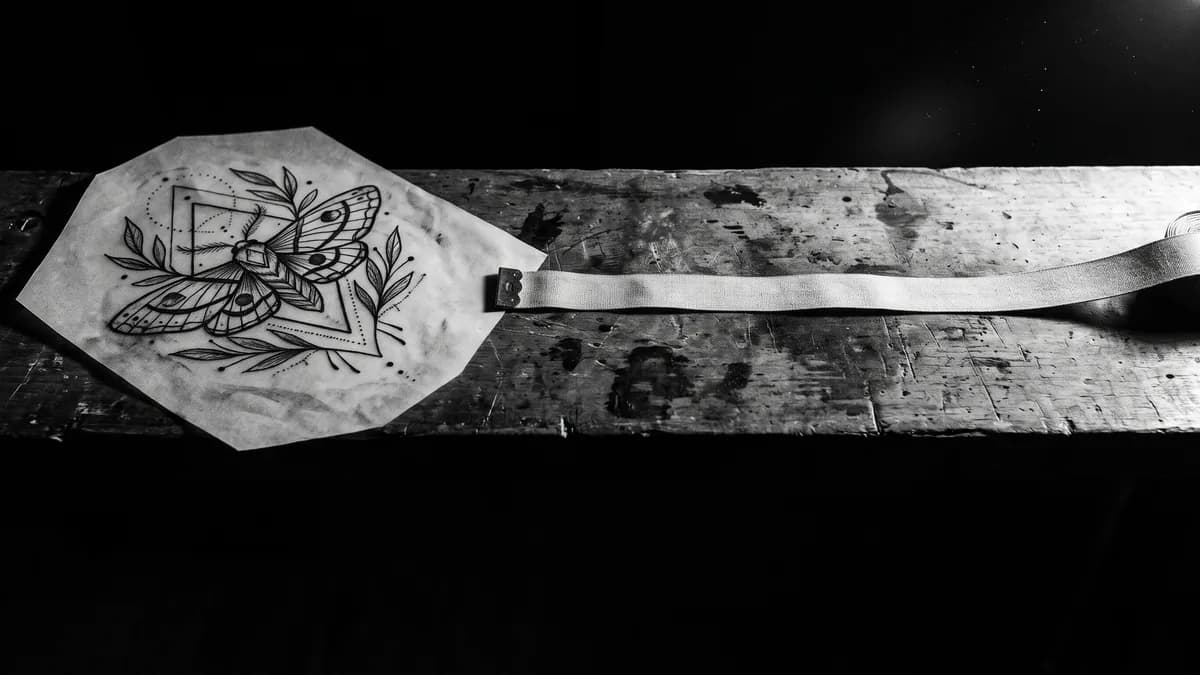
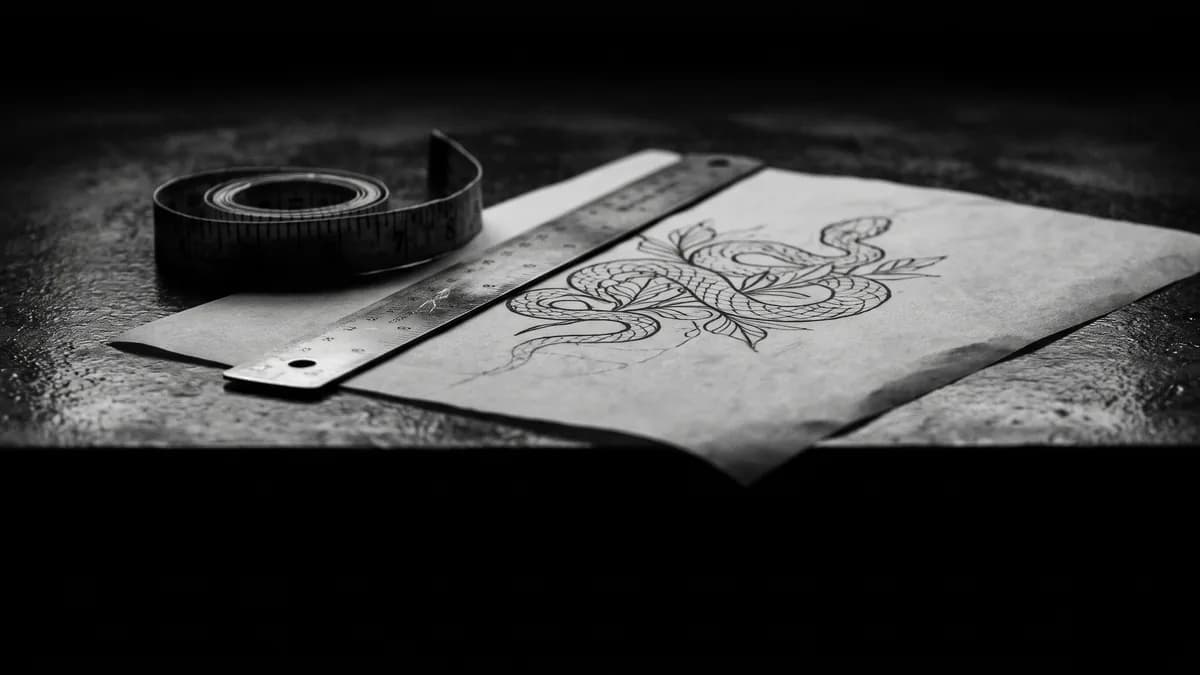
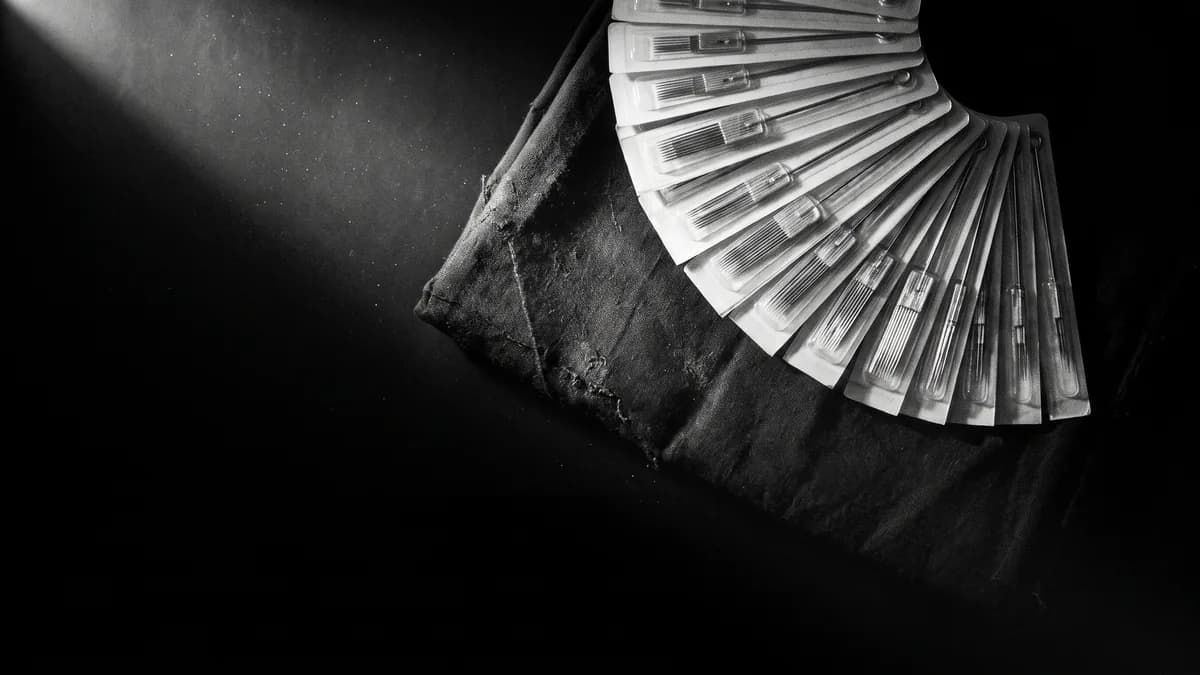
Fine Line Tattoos in Cartagena, Colombia: Master Needle Precision
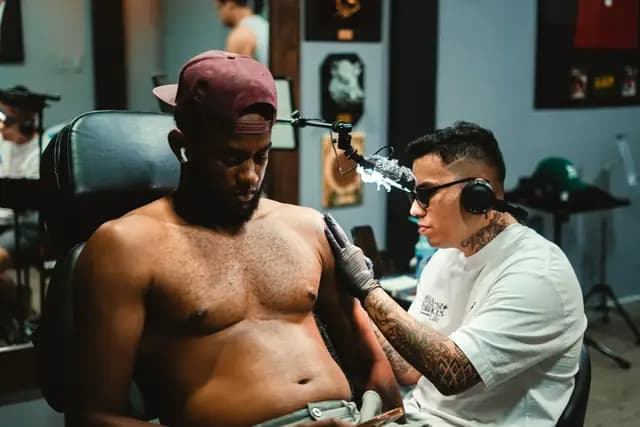
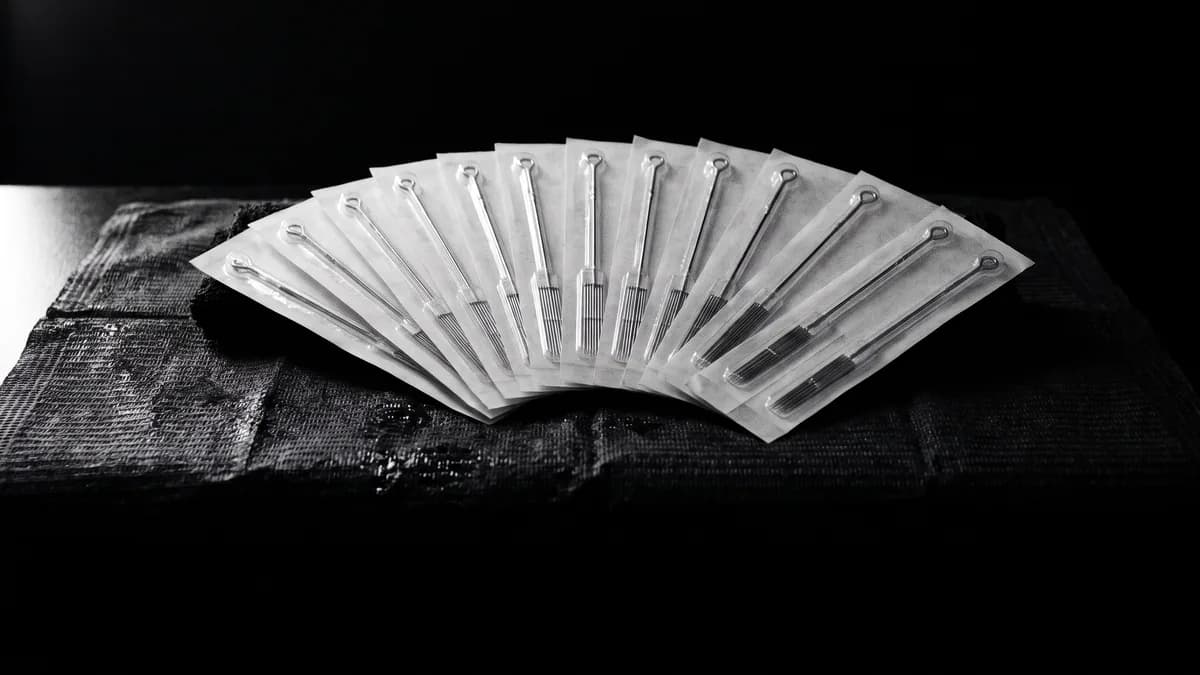
- 01.Fine line uses one- to three-needle cartridges and a single pass per stroke: there is no second chance to correct a line.
- 02.Judge an artist only on healed work. A fresh fine line photo looks flawless even when the technique was wrong.
- 03.In Cartagena, daily SPF 50 is part of the technique, not an optional tip: sun is what destroys thin linework.
Looking for delicate, precise, micro tattoos while visiting Cartagena? Discover our resident fine line specialist.
Fine line is the style most travelers ask for in Cartagena, and the one most people misjudge. It looks like the easy option — little drawing, no packing, a short session. From behind the machine it is the style that forgives the least.
This guide covers what a fine line tattoo Cartagena actually involves: how it is executed, where to place it so it lasts, how it heals in Caribbean heat, what to check in an artist's portfolio, and how to book before you land.
1. What fine line actually is
Fine line is built entirely on outline: strokes between 0.3 and 0.8 millimeters, no solid packing, minimal or no shading. The drawing holds together through the line itself and the untouched skin around it.
It is not the same as minimalist, even though the words get used interchangeably. Minimalist describes how simple the concept is; fine line describes how thin the line is. A botanical composition with twenty leaves can be fine line and not minimalist at all.
It is also not microrealism. Microrealism builds depth and volume through grey transitions; fine line is deliberately flat and graphic.
2. One needle, one pass
The work is done with cartridges of one, three or five thin needles grouped tightly so they deposit a narrow, even line. The machine runs at lower power and the hand moves slower than in traditional work.
Depth is what defines the technique. The ink has to settle in a very narrow band of the dermis. Too shallow and part of the pigment leaves with the healing skin, so the line comes out broken. Too deep and the ink spreads sideways beneath the surface, and within a year or two the stroke looks thick and blurred — what the trade calls a blowout.
Unlike shaded styles, there is no recovery. In a gradient a slightly off stroke disappears into the grey. In fine line that stroke sits alone on clean skin, permanently visible.
3. Placement that lasts
Placement determines the lifespan of thin linework more than any other variable. Friction wears the stroke down and sun fades it. In a city where you live in short sleeves year-round, the second factor counts double.
- Excellent: inner forearm, inner bicep, thigh, side of the torso, shoulder blade.
- Good: outer forearm, calf, collarbone, back of the neck.
- Demanding: ribs and sternum, because of pain and the movement of breathing during the session.
- Not recommended: fingers, sides of the hand, edge and sole of the foot. Skin renews fast there and the line fades within months.
4. Healing fine line in Caribbean weather
The first two weeks decide how the piece looks for the rest of its life. A hot, humid climate adds two complications: you sweat more, which keeps the area damp under clothing, and sun exposure is constant even on overcast days.
The good news is that fine line closes faster than packed work because there is less trauma to the skin. The surface is usually sealed between day seven and day ten, though the deeper layer keeps settling for a month.
The bad news is that sun damage starts on day one of exposure and accumulates. It cannot be undone later, only touched up.
If your trip includes beach days, get the tattoo at the end, not at the start.
Salt water, pool chlorine, sand and direct sun are all off limits until the skin has fully closed — roughly two to three weeks. Plan the tattoo for the last days of your trip and you avoid the choice entirely.
5. How to judge an artist for this style
Fine line is where the gap between a specialist and an occasional practitioner is widest, and paradoxically where it is hardest to spot on social media. A freshly tattooed line looks crisp in every single case, even when executed badly, because irritated skin makes the stroke stand out.
Healed work is the only real evidence. If a portfolio only shows photos taken minutes after the session, you are not seeing the result — you are seeing the best moment of the result.
- Ask for healed pieces, six months or older.
- Check whether lines hold a consistent thickness along their whole length.
- Look for visible gaps between strokes, not lines touching each other.
- Ask what minimum size they recommend for your design — a specialist will say no to over-compression.
- See whether they adapt the design to the body part or apply the same drawing anywhere.
6. Pricing and booking from abroad
Fine line runs from 220,000 to 350,000 COP (about 55-90 USD) for pieces of 5 to 7 cm, and 400,000 to 700,000 COP (100-175 USD) for compositions of 10 to 15 cm. Full-forearm work is quoted by session.
You do not need to be in Cartagena to get a quote. Send the reference image, the body placement and the approximate size in centimeters by WhatsApp and we quote the same day, in Colombian pesos.
For custom designs, book with several days of lead time: the drawing is prepared before your appointment, not improvised on the day. From December through March, allow one to two weeks.
“En Delorean Tattoo Studio priorizamos la anatomía, la longevidad de la tinta y la bioseguridad grado hospitalario sobre las modas pasajeras. Cada pieza se proyecta para que luzca con máxima dignidad y detalle a lo largo de los años.”
Preguntas Frecuentes sobre el Tema
How much does a fine line tattoo cost in Cartagena?
220,000 to 350,000 COP (about 55-90 USD) for pieces of 5 to 7 cm, and 400,000 to 700,000 COP (100-175 USD) for compositions of 10 to 15 cm. Full-forearm pieces are quoted by session.
Do fine line tattoos fade faster?
They do not fade — they thicken. Ink spreads slowly under the skin and the stroke gains weight over the years. A design with enough space between lines stays readable for decades; a cramped one closes into a blur.
Can I get tattooed and still go to the beach on this trip?
Not on the same piece. Salt water, sand, pool chlorine and direct sun are off limits until the skin has fully closed, around two to three weeks. Schedule the tattoo for the end of your trip.
Do your artists speak English?
Yes. Consultations, design discussion and aftercare instructions are handled in English, and the written aftercare guide is provided in English as well.
How far in advance should I book?
A few days is usually enough for small pieces outside high season. For custom designs, and from December through March, allow one to two weeks so the drawing can be prepared properly.
What is a blowout and can it be fixed?
It is ink spreading sideways when the needle goes too deep, leaving a blurred halo around the stroke. Going over it makes it thicker, so it is not fixed by retracing: the area is redesigned, sometimes after laser sessions to lighten it first.
¿Quieres cotizar tu diseño en Cartagena?
Escríbenos directamente por WhatsApp. Te respondemos en minutos con presupuesto exacto, asesoría de colocación anatómica y agenda disponible.