Small Tattoos in Cartagena: 15 Meaningful Ideas for Travelers
- 01.The best travel tattoos are specific rather than generic: a detail you actually noticed beats a symbol anyone could have chosen.
- 02.Keep small pieces to few elements with generous spacing — ink spreads over the years and cramped designs close into a blur.
- 03.Schedule it for the end of your trip, after the beach and island days.
Meaningful small tattoo ideas drawn from Cartagena itself, and how to make sure they still read in twenty years.
A tattoo is the one souvenir that does not end up in a drawer. The risk is picking something generic — a wave, a compass, a palm tree — that could have come from any coastal city on earth.
This is a set of ideas drawn from what is actually distinctive about Cartagena, plus the design rules that decide whether a small piece still looks good decades from now.
1. What makes a travel tattoo work
The difference between a piece you still like at forty and one you regret is almost always specificity.
A generic palm tree says you went somewhere warm. A detail you actually noticed — the particular shape of a door knocker, the outline of a specific building, a street name — carries the memory itself.
Specific also tends to be better design. Generic symbols are generic because they have been simplified to nothing; a real detail has character, and character is what makes a small piece interesting rather than decorative.
The test: would this tattoo mean the same thing if you had taken a different trip? If yes, go more specific.
2. Ideas from the old city
Cartagena's walled city is full of detail that translates well to small-format linework, and most of it is far less used than the obvious landmarks.
- A door knocker — the aldabas on colonial doors come in lizards, lions and hands, each historically signalling something about the household.
- A balcony silhouette with its bougainvillea spilling over the rail.
- An arch or window frame from a specific street you walked.
- The outline of the clock tower, simplified to its essential shape.
- A street name in the typography of the ceramic tiles.
- A cannon or a section of the wall, reduced to a clean profile.
3. Ideas from the sea and the islands
The Caribbean material is the most requested and therefore the easiest to make generic. The way around that is picking something precise rather than symbolic.
A specific species, a particular coastline, an actual coordinate — these keep the connection to the place while avoiding the stock image.
- A specific fish or coral species you saw while snorkelling, rather than a generic wave.
- The coastline outline of the Rosario Islands.
- Coordinates of a place that mattered, in clean lettering.
- A sailing boat or a fishing canoe in minimal linework.
- A mangrove root structure, which is visually distinctive and rarely used.
- A pelican in flight, the bird you actually see here constantly.
4. Ideas from the culture and the botany
Beyond architecture and sea, there is a third category that tends to produce the most personal pieces.
Local flora is particularly good for small-format work: botanical linework is one of the styles that holds up best at small sizes, because the shapes read by silhouette.
- Bougainvillea, the flower on every wall in the old city.
- A hibiscus or frangipani in fine line.
- A palenquera's fruit bowl, simplified to its shapes.
- A word in local Spanish that you picked up and kept using.
- A date in Roman numerals, if the trip marked something.
- A matching piece with whoever you travelled with, designed as two halves rather than two copies.
5. The rules that make small pieces last
Ink spreads slowly under the skin for the entire life of a tattoo. Lines thicken, gaps close. In a large piece nobody notices; in a small one it decides everything.
That single fact produces all the design rules worth following.
- Fewer elements. Three well-spaced beats ten crowded into the same space.
- Generous gaps between lines, sized for future spreading rather than today's look.
- Consistent line weight throughout the stroke.
- Solid black over light grey, which fades first under tropical sun.
- Shapes that read by silhouette, so they survive losing internal detail.
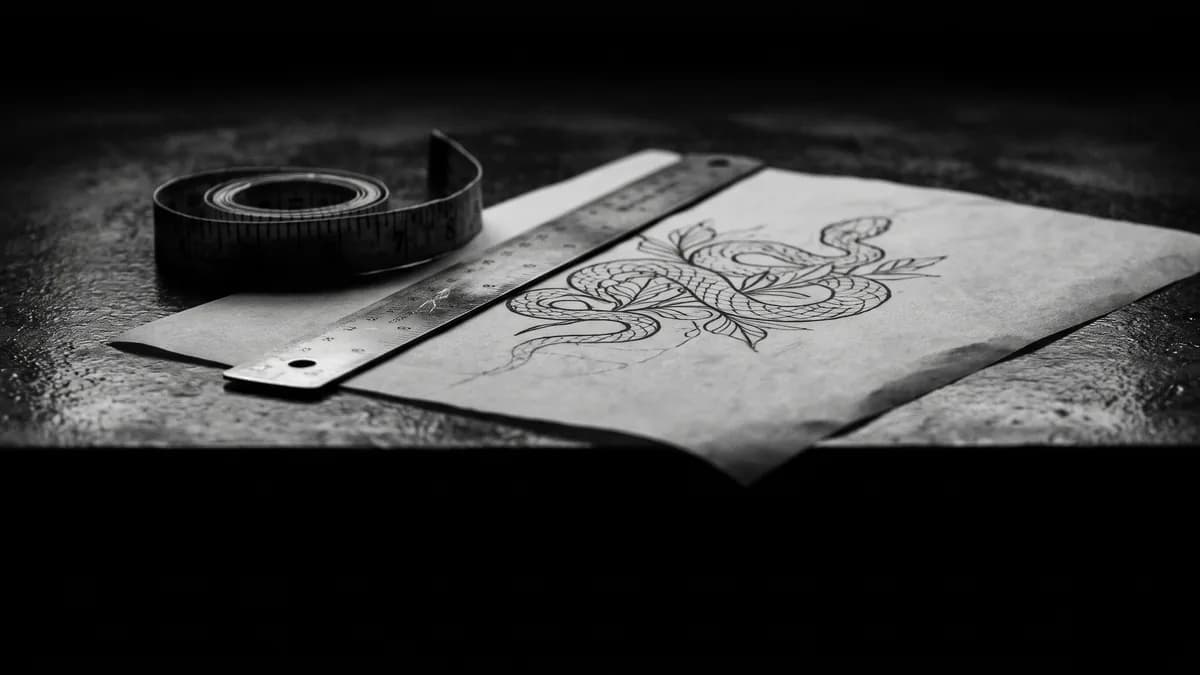
Print your design at actual size and look at it from one meter away — normal conversation distance. If the internal elements already blur together, that is what the tattoo will look like in a few years. It needs more size or fewer elements.
6. Practical notes for travelers
Two things to plan. First, timing: a fresh tattoo cannot go in the sea, a pool, sand or direct sun until the skin has fully closed, two to three weeks. Schedule it for the last days of your trip, after the beach and the islands.
Second, placement. Think about sun exposure for the long term — inner forearm, inner bicep, thigh and the side of the torso hold ink far better than fingers, hands and feet, which wear down fast.
Pricing for small work starts at the 150,000 COP minimum and runs to around 350,000 COP for pieces up to 7x7 cm, depending on detail. Quotes are given and charged in Colombian pesos.
“En Delorean Tattoo Studio priorizamos la anatomía, la longevidad de la tinta y la bioseguridad grado hospitalario sobre las modas pasajeras. Cada pieza se proyecta para que luzca con máxima dignidad y detalle a lo largo de los años.”
Preguntas Frecuentes sobre el Tema
What is a good small tattoo idea from Cartagena?
Something specific rather than symbolic: a colonial door knocker, a balcony silhouette, the coastline of the Rosario Islands, a species you actually saw, or bougainvillea. A generic palm tree could come from anywhere.
How much does a small tattoo cost in Cartagena?
From the 150,000 COP minimum for pieces up to 4x4 cm, and 220,000 to 350,000 COP up to 7x7 cm. Within each range the price depends on detail rather than size alone.
Will a small tattoo still look good in ten years?
If it was designed for that size, yes. Ink spreads under the skin over time, so pieces with few elements and generous spacing stay readable for decades, while crowded designs close into a blur.
Where should I put a small travel tattoo?
Inner forearm, inner bicep, thigh or the side of the torso — low friction and easy to shield from the sun. Avoid fingers, the sides of the hands and feet, where thin linework wears down within months.
When in my trip should I get it?
The last days, after the beach and island days. A fresh tattoo cannot go in sea water, sand, a pool or direct sun until the skin has fully closed, which takes two to three weeks.
¿Quieres cotizar tu diseño en Cartagena?
Escríbenos directamente por WhatsApp. Te respondemos en minutos con presupuesto exacto, asesoría de colocación anatómica y agenda disponible.